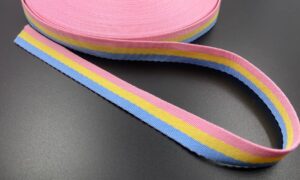
PP and PET are both synthetic fibers, most commonly found in webbing, ropes and cables, non-woven fabrics, and garment accessories. Below is a complete breakdown of their similarities, differences, and selection criteria.
I. PP and PET Similarities
- Both are petroleum-based synthetic fibers — not natural, and independent of animal or plant sources.
- Both are hydrophobic and moisture-resistant (dry faster than cotton, resistant to mildew).
- Both resist acids and alkalis, bacteria, and are mothproof.
- Both can be spun into yarn, woven into webbing, made into non-woven fabrics, and solution-dyed.
- Their appearance is very similar; difficult to distinguish without testing.
II. PP and PET Differences (Quick-Reference Table)
| Dimension | PP (Polypropylene) | PET (Polyester) |
|---|---|---|
| Density | 0.91 — lighter than water, floats | 1.38 — sinks in water |
| Strength | Moderate, lower than polyester | High — breaking strength 30%–50% higher |
| Elongation & Recovery | Higher elongation, low modulus | Dimensionally stable, creep-resistant, resists deformation |
| Moisture Absorption | Nearly zero (<0.1%), wet strength = dry strength | ~0.4% moisture regain, still considered hydrophobic |
| Heat Resistance | Melting point 160–170°C; sensitive to heat, ironing, and drying | Melting point 250–260°C; good heat tolerance |
| UV / Weather Resistance | Poor — prone to UV degradation; UV stabilizers required | Good — strong outdoor weatherability |
| Abrasion Resistance | Fair — long-term friction causes fuzzing | Excellent — withstands repeated bending without damage |
| Dyeability | Difficult to dye; mostly solution-dyed with masterbatch; narrow color range | Easy to dye; good color fastness; wide color range |
| Chemical Resistance | Excellent resistance to both acids and alkalis | Moderate alkali resistance; strong alkali at high temperature causes hydrolysis |
| Cost | Lower raw material and processing cost | Slightly more expensive; more finishing steps required |
| Hand Feel | Soft, light, bulky | Crisp, dense, structured |
Polypropylene (PP)
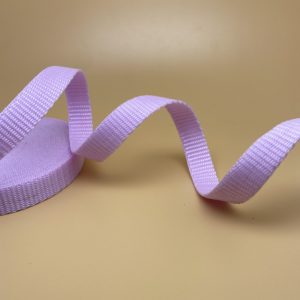
Polyester (PET)